
BLAIR DNA Project


DNA 103: Grouping Participants

Blair of Ladymuir
Conventional Research
Mystery surrounds the origins of the Blairs of Ladymuir. However, while
some of the early Blairs of Ladymuir and their connections seem obscure,
the Lands of Ladymuir comprised an estate of rough farmlands approximately
10 kilometers north west of Castle Sernpill and Sempill Loch in
Renfrewshire west of Glasgow and about 10 kilometers south of the town of
Kilmacolm. It was these lands which were said to have come into possession
of two brothers, James and William Blair of Dalry, Ayrshire, about 1620.
"Ladymuir" still exists in Renfrewshire and can be found on a detailed map
of Scotland. Further details are unknown.
There are two major mysteries surrounding the
Blairs of Ladymuir. One is their ancestry (it is believed that they
were grandsons of John and Grisel Blair, of the 15th generation of
Blair descendants on the Blair of Blair lineage) and the other is
the line of descent from James to Hugh Blair (b. c1660) who married
Margaret Rodger.
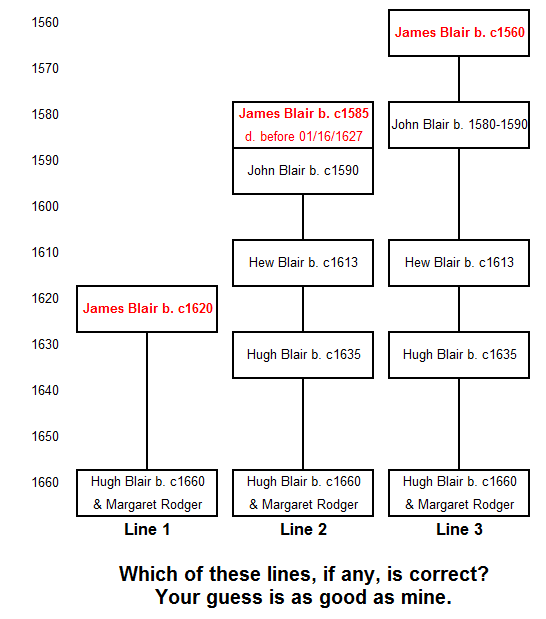
Before we get into a discussion of a Ladymuir connection to the Blair of Blair, let's first look at the line of descent from James to Hugh Blair. Shown at the right are three possible lines of descent that various pedigree charts put forward.
The first line showing Hugh Blair as the son of James has several problems. It is highly unlikely that James could be born in 1620 if he came into possession of Ladymuir about 1620. An even bigger problem is that at least one record indicates that James died prior to January 16, 1627. There are also other records which indicate this line is not correct.
The second line shows Hugh as the gr-gr-gr grandson of James. This line shows James b. about 1585 and his son John born about 1590, which is quite impossible. Either James would have to be born around 1570 or John and Hew would have to born later than established.
The third line is actually the same as line 1
except it places James' birth as about 1560. This would mean James
was between 30 and 40 when he had John and that he about 60 when he
took procession of Ladymuir.
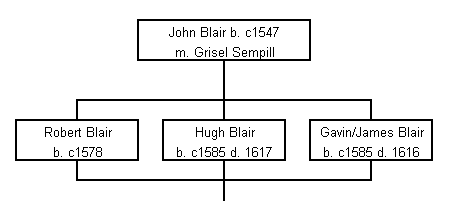
If James Blair was the grandson of John Blair and Grisel Sempill, one of the three sons of John shown at the right would most likely be James' father. Although John had three other sons (John, Alexander, and Bryce) it is unlikely that they were father.
If the birth dates of Robert, Hugh, and Garvin/James are even somewhat accurate it is highly unlikely that James of Ladymuir would be born before 1595 (and this assumes Robert was his father and had James when he was 17). If his father were Hugh or Garvin/James he would have born after 1600.
Conventional research still leave the 2 questions unanswered. Does James Blair of Ladymuir descend from the Blair of Blair? What is the line of descent from James Blair to Hugh Blair? Current records do not provide the answers. Maybe in time new records will be uncovered which will answer these questions, but what if no new records are discovered?
DNA Testing
There is probably no way that DNA testing will help sort out the
lineage from James Blair to Hugh Blair. To do this we would need to
find known descendant from the those Blairs believed to be part of the
line, and since we are not even sure who is part of the line from
James to Hugh it is unlikely we will know who their descendants are.
However, it may be possible to use DNA testing to determine if the Blair of Ladymuir line descends from the Blair of Blair. To do so we must accept the assumption that Hugh Blair (b. c1660) who married Margaret Rodger is a direct descendant of the original James Blair of Ladymuir. Given the fact Hugh had possession of Ladymuir this seems like a reasonable assumption.
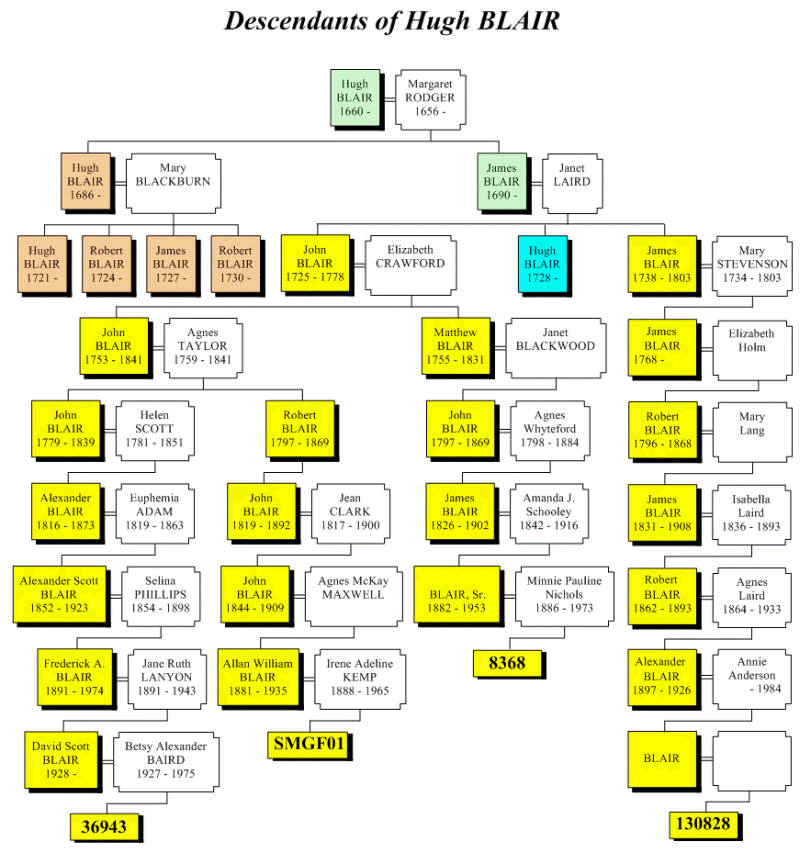
We now have test results for three participants who descend from Hugh Blair and Margaret Rodger through the James Blair/Janet Laird, John Blair/Elizabeth Crawford line and one participant who descends through the James Blair/Janet Laird, James Blair/Mary Stevenson line.
Participant #8368 (Ernest William "Bill" Blair) descends through Matthew Blair (son of John Blair/Elizabeth Crawford) and Janet Blackwood. Bill has tested on 25 markers.
Participant #36943 (Robert Douglas Blair) descends through John Blair (son of John Blair/Elizabeth Crawford) and Agnes Taylor. Robert has tested on 67 markers.
The third participant, #130828, descends from James Blair/Mary Stevenson and has tested 37 markers.
The fourth individual (SGMF01) is not part of the Blair DNA Project, but tested with the Sorenson Molecular Genealogy Foundation (SMGF). SGMF01 descends from John Blair/Agnes Taylor, just like Robert. However Robert comes down through son John while SMGF01 comes down through son Robert. SMGF does not test all of the markers that FTDNA tests.
The four participants match each other on all common markers tested. They mismatch the Blair of Blair ancestral haplotype on 10 of 25 markers, 15 of 37 markers, and 23 of 67 markers.
The actual marker values for each participant and the Blair of Blair ancestral haplotype are shown in the table below.
| Marker | 1 | 2 | 3 | 4 | 5 | 6 | 7 | 8 | 9 | 10 | 11 | 12 | 13 | 14 | 15 | 16 | 17 | 18 | 19 | 20 | 21 | 22 | 23 | 24 | 25 | 26 | 27 | 28 | 29 | 30 | 31 | 32 | 33 | 34 | 35 | 36 | 37 |
| DYS# | |||||||||||||||||||||||||||||||||||||
| Part ID# |
3 9 3 |
3 9 0 |
1 9 * |
3 9 1 |
3 8 5 a |
3 8 5 b |
4 2 6 |
3 8 8 |
4 3 9 |
3 8 9 i |
3 9 2 |
3 8 9 ii |
4 5 8 |
4 5 9 a |
4 5 9 b |
4 5 5 |
4 5 4 |
4 4 7 |
4 3 7 |
4 4 8 |
4 4 9 |
4 6 4 a |
4 6 4 b |
4 6 4 c |
4 6 4 d |
4 6 0 |
G A T A H 4 |
Y C A II a |
Y C A II b |
4 5 6 |
6 0 7 |
5 7 6 |
5 7 0 |
C D Y a |
C D Y b |
4 4 2 |
4 3 8 |
| B of B | 12 | 24 | 14 | 11 | 11 | 15 | 12 | 12 | 12 | 13 | 13 | 29 | 15 | 10 | 10 | 11 | 11 | 26 | 15 | 19 | 30 | 14 | 15 | 17 | 18 | 12 | 11 | 19 | 23 | 15 | 16 | 18 | 17 | 35 | 38 | 12 | 12 |
| 8368 | 13 | 24 | 13 | 11 | 11 | 14 | 12 | 12 | 12 | 13 | 13 | 29 | 18 | 9 | 9 | 11 | 11 | 25 | 15 | 19 | 29 | 15 | 15 | 17 | 17 | ||||||||||||
| 36943 | 13 | 24 | 13 | 11 | 11 | 14 | 12 | 12 | 12 | 13 | 13 | 29 | 18 | 9 | 9 | 11 | 11 | 25 | 15 | 19 | 29 | 15 | 15 | 17 | 17 | 10 | 11 | 19 | 23 | 15 | 14 | 18 | 17 | 36 | 37 | 11 | 12 |
| 130828 | 13 | 24 | 13 | 11 | 11 | 14 | 12 | 12 | 12 | 13 | 13 | 29 | 18 | 9 | 9 | 11 | 11 | 25 | 15 | 19 | 29 | 15 | 15 | 17 | 17 | 10 | 11 | 19 | 23 | 15 | 14 | 18 | 17 | 36 | 37 | 11 | 12 |
| SMGF01 | 13 | 24 | 13 | 11 | 11 | 14 | 12 | 12 | 12 | 13 | 13 | 29 | 18 | 9 | 9 | 11 | 11 | 25 | 15 | 19 | 29 | 15 | 15 | 17 | 17 | 10 | 11 | 19 | 23 | 15 | 11 | 12 | |||||
The diagram below show the pedigrees of the three participants based on conventional research.
Conclusions
First there little doubt that all four participants are in fact
descendants of James Blair and Janet Laird. All four participants
match exactly on all the markers they tested in common.
Second there is no doubt that James Blair who married Janet Laird does not descend from the Blair of Blair. The best match with anyone in Group 1 who tested on 37 markers is 22 for 37, indicating less a 0.5% probability of sharing a common ancestor within 24 generations. At the 25 marker level the best match with anyone in Group 1 is 15 for 25, also indicating less a 0.5% probability of sharing a common ancestor within 24 generations. At the 67 marker level the probability of sharing a common ancestor within 24 generations is about 0.01%.
DNA test results also provide strong, but not compelling evidence, that Hugh Blair of Ladymuir does not descend from the Blair of Blair. Although unlikely, it is possible that James is not a descendant of Hugh. Further testing is required.
The best possible candidate for testing would be a Blair who descends from Hugh Blair and Mary Blackburn. Unfortunately I have no information on this line other than Hugh possibly had four sons shown above. It appears that one of these sons (Robert) died at an early age since there are two Roberts listed.
This WebPage was last updated 04/05/2015
|
Custom Web Search Search Genealogy, DNA, and Genetic Genelogy websites |
|
Custom Web Search Search Genealogy, DNA, and Genetic Genelogy websites |
| Contact the Blair DNA Project Coordinator |
© January 1, 2010, blairdna.com

God Bless
America
and its Allies